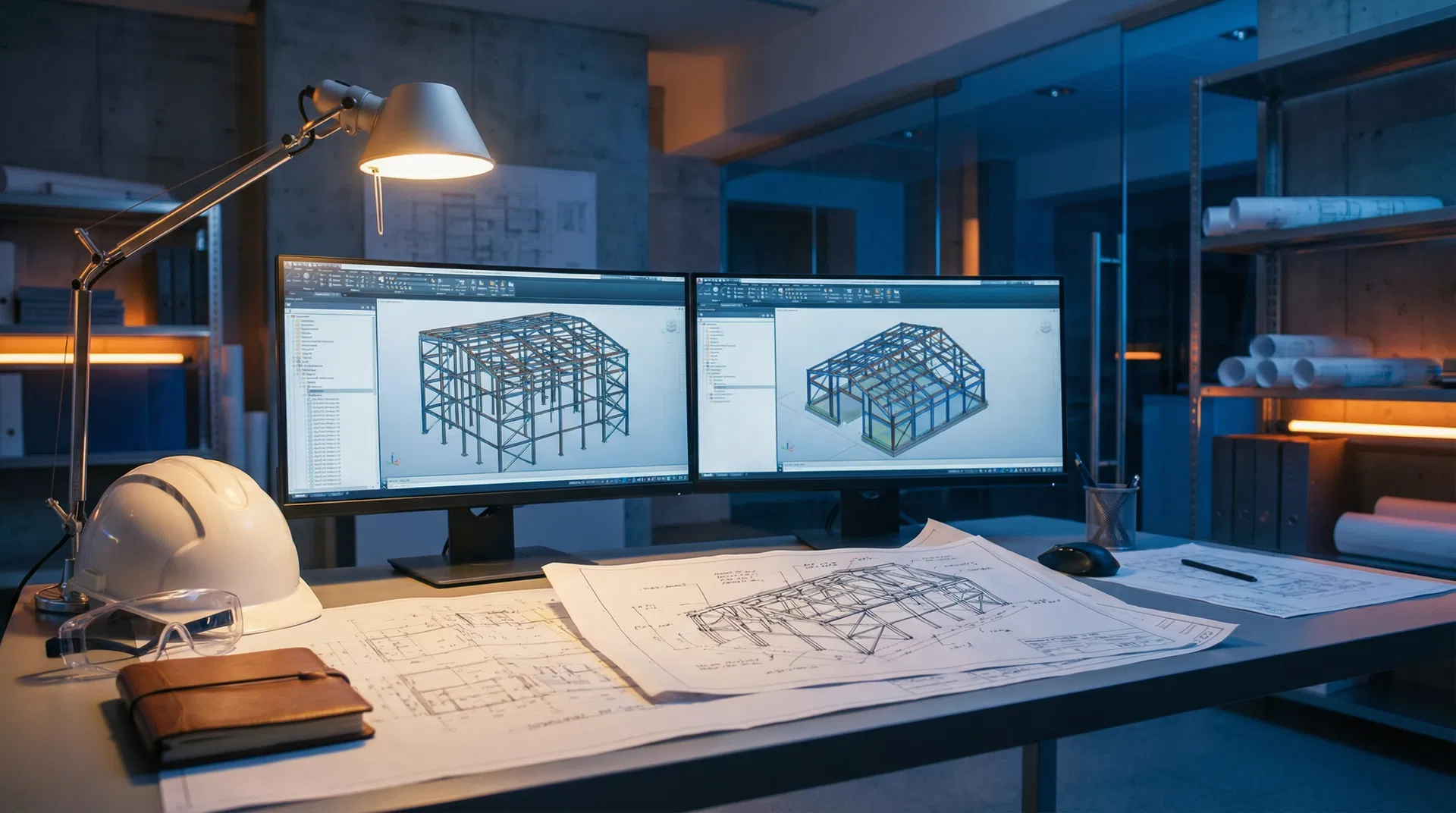
BIM Integration in Steel Structural Design and Fabrication
Building Information Modeling (BIM) has revolutionized steel structural design [blocked], transforming how engineers, fabricators, and contractors collaborate throughout project delivery. This digital approach enhances coordination, reduces errors, and streamlines workflows from initial design through construction completion.
Understanding BIM in Steel Construction
BIM extends beyond three-dimensional modeling to encompass a comprehensive digital representation of a building's physical and functional characteristics. For steel construction, BIM models contain detailed information about every structural member, connection, and assembly, creating a single source of truth that all project stakeholders can access and update.
The National Institute of Building Sciences defines BIM as "a digital representation of physical and functional characteristics of a facility," emphasizing that BIM encompasses processes and technologies that enable collaborative project delivery. This collaborative approach proves particularly valuable for steel framing systems [blocked], where coordination between design, fabrication, and erection is critical to project success.
Enhanced Design Coordination
BIM enables unprecedented coordination between structural systems and other building components. Three-dimensional models reveal conflicts between steel members and mechanical, electrical, and plumbing systems before fabrication begins, eliminating costly field modifications. Automated clash detection identifies interferences that would be difficult or impossible to detect in two-dimensional drawings.
This coordination extends to architectural elements, ensuring that structural steel integrates seamlessly with building facades, interior partitions, and other architectural features. Early identification of coordination issues enables design modifications when changes are least expensive, avoiding the exponential cost increases associated with late-stage revisions.
Streamlined Fabrication Process
BIM models serve as the foundation for digital fabrication, with detailed three-dimensional geometry driving computer-controlled cutting, drilling, and welding equipment. This direct connection between design and fabrication eliminates manual translation of drawings into machine instructions, reducing errors and accelerating production.
Fabricators can extract quantities, generate cutting lists, and optimize material usage directly from BIM models. Nesting algorithms arrange components on steel plates to minimize waste, while production scheduling tools sequence fabrication to align with project requirements and delivery schedules.
Improved Construction Planning
BIM enables detailed construction sequencing and logistics planning before work begins on site. Four-dimensional BIM (3D + time) visualizes construction sequences, identifying potential conflicts in erection sequences and enabling optimization of crane placement and material staging. This planning reduces field coordination issues and improves construction efficiency.
Five-dimensional BIM adds cost information to the model, enabling real-time cost tracking and facilitating value engineering during design. Quantity takeoffs extracted directly from the model ensure accuracy and update automatically as designs evolve, maintaining cost estimates that reflect current design intent.
Collaboration and Communication
BIM platforms facilitate collaboration among geographically distributed project teams. Cloud-based model hosting enables real-time access to current design information, ensuring all stakeholders work from the same data. Model-based communication reduces misunderstandings that arise from ambiguous drawings or specifications.
Issue tracking and resolution occur within the BIM environment, creating a documented record of design decisions and coordination resolutions. This transparency improves accountability and provides valuable documentation for future reference.
Quality Control and Verification
BIM enables automated checking of design compliance with codes and standards. Rule-based systems verify that member sizes, connection details, and structural configurations meet specified requirements, catching errors that might escape manual review. This automated checking improves design quality while reducing review time.
Fabrication models can be compared against design models to verify conformance, ensuring that fabricated components match design intent. This verification occurs before components leave the factory, enabling corrections before field installation.
As-Built Documentation
BIM models updated to reflect as-built conditions provide valuable documentation for facility management and future renovations. Unlike traditional as-built drawings that quickly become outdated, digital models can be maintained and updated throughout a building's lifecycle, supporting maintenance planning and renovation design.
Facility managers can use BIM models to track equipment locations, plan maintenance activities, and manage space utilization. This extended value of BIM beyond initial construction provides ongoing benefits throughout a building's operational life.
Industry Standards and Interoperability
Industry Foundation Classes (IFC) and other open standards enable data exchange between different software platforms, ensuring that BIM data remains accessible regardless of specific software choices. These standards facilitate collaboration among project teams using different tools while preserving data integrity.
Organizations like buildingSMART International develop and maintain these standards, ensuring continuous improvement and adaptation to evolving industry needs.
Conclusion
BIM integration in steel structural design [blocked] delivers measurable benefits in coordination, efficiency, and quality. As the construction industry continues its digital transformation, BIM capabilities will expand further, enabling even greater value from digital project delivery approaches.
Our engineering team [blocked] leverages advanced BIM tools and processes to deliver coordinated, constructible designs that streamline fabrication and construction. Contact us [blocked] to learn how BIM can enhance your next steel construction project.
Related Articles: Prefabrication Advantages [blocked] | Benefits of Cold-Formed Steel [blocked]